
Here's the scoop: sometimes the easiest food plot improvement happens before you'd even think about hooking up the disk.
Frost-seeding clover uses late-winter or early-spring freeze-thaw cycles to help small seed settle into the soil surface. Done in the right opening, it can thicken a thinning clover stand or introduce clover into a properly prepared site without a full round of tillage.
March often brings that opportunity in Wisconsin. But northwest Wisconsin weather doesn't follow a tidy planting appointment. Some years the ground is still buried. Other years the useful window comes and goes quickly.
Watch the conditions, not just the month.
What frost-seeding actually does
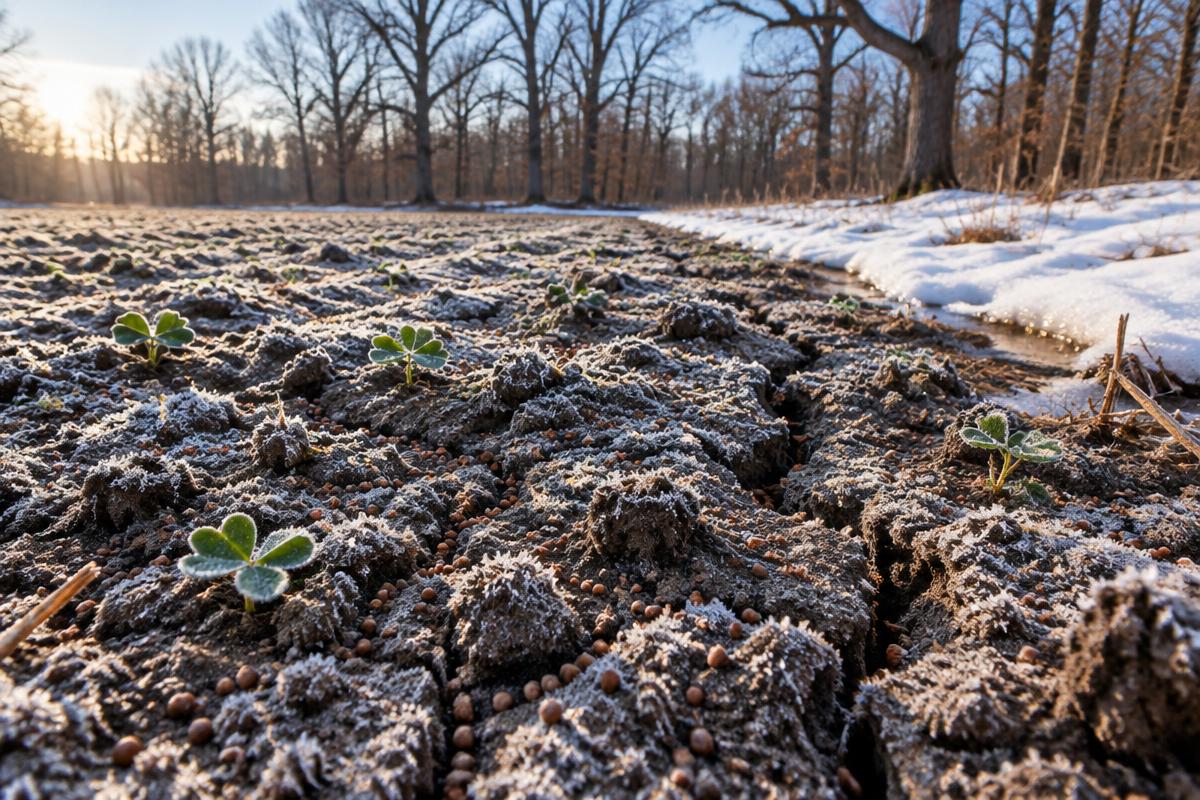
As exposed soil freezes and thaws, its surface can develop small cracks and a loose, honeycombed texture. Clover seed broadcast over that surface can settle into those small openings.
The goal is seed-to-soil contact with shallow placement. Clover seed is small; burying it deeply is not the objective.
This approach is different from scattering seed on any frozen surface and hoping spring takes care of it. Seed sitting on thick dead grass, deep snow, or a mat of leaves may never reach a useful place to germinate.
Freeze-thaw action helps with placement. It doesn't remove weeds, correct acidity, or guarantee enough moisture after germination.
The easiest March job starts in fall
Good fall preparation makes the spring pass much more dependable.
Start with a soil test. Correct acidity and fertility according to the results, giving lime time to work where it's needed. Choose a site with enough sunlight for the clover you intend to grow.
Next, deal with competing vegetation. A heavy sod of established grass is not an inviting seedbed for tiny clover seedlings. Plan vegetation control ahead of time using methods appropriate to the site and, where applicable, the product label.
Reduce excessive residue so seed can reach soil. That may involve mowing and other preparation, but mowing alone won't eliminate a vigorous perennial grass problem.
Walk the opening before winter. If you can't see how seed will reach the soil, freezing weather probably won't solve the problem for you.
Pick a suitable stand and seed
A thin existing clover plot with exposed soil between plants can be a good candidate. So can a previously prepared opening with limited competition.
A shaded patch under a closed canopy, a permanently wet depression, or a thick grass field usually needs more work first.
Choose clover suited to your soils, drainage, intended use, and management plans. Different clovers have different strengths and lifespans; there isn't one bag that's best everywhere.
Follow the seed supplier's frost-seeding rate rather than borrowing a rate meant for another planting method. Check whether the seed is coated, since coating affects how much actual seed is in a pound. Use the appropriate inoculant when required, and handle inoculated seed according to its directions.
Watch for the right surface conditions
Look for exposed soil and a pattern of freezing nights followed by daytime thawing. A firm morning surface may make foot access easier, but conditions can soften quickly as temperatures rise.
Avoid broadcasting over deep snow. Seed can move as snow melts, and concentrated runoff can carry it away from the intended area. Ice-covered ground is another poor substitute for a receptive soil surface.
Don't take heavy equipment into a thawing plot just because the top looked frozen at daylight. If access means ruts, wait or use a lighter method that won't damage the site.
For small openings, a calibrated hand-crank or shoulder spreader may be all that's needed.
Spread evenly, then give seedlings a chance
Small seed can disappear from a spreader faster than expected. Check your settings and measured coverage before committing the whole bag.
Dividing the seed into two portions and making crossing passes can help improve distribution. Keep the application within the recommended total rate.
After emergence, watch competition and soil moisture. Seedlings need room and light. If mowing becomes necessary, time it and set the height to reduce competing growth without repeatedly scalping young clover. Follow label restrictions for any herbicide used around the planting.
Don't judge the whole project by the first warm afternoon. Emergence and early growth depend on conditions, and a thin stand may need evaluation before you decide whether additional work is warranted. Photograph a few marked spots through spring so you can compare actual establishment rather than relying on memory.
Quick reference for a northwest Wisconsin frost seeding
- Window: usually late February through March, once most snow is gone and you're getting frozen mornings and thawing afternoons. Seeding on a frozen morning lets you walk the plot without leaving tracks.
- Seeding rates (uncoated seed, broadcast alone): roughly 6 to 10 pounds per acre for red clover and 2 to 4 pounds per acre for white or ladino clover. Coated seed weighs more, so follow the bag rate.
- Inoculant: use an inoculant labeled for clover unless the seed is pre-inoculated, and keep it out of heat and sun.
- Fall prep: mow or graze the plot short in fall and get the soil test and lime done then. You want bare soil showing between plants by March.
- Calibrate first: at 2 to 4 pounds per acre, a quarter-acre plot only needs about half a pound to a pound of white clover. Small seed empties a spreader fast.
Know when another method makes more sense
Frost-seeding is a useful shortcut, not a rescue plan for every neglected opening. Heavy weeds, poor drainage, serious soil problems, or almost no exposed soil may call for a more complete renovation.
Want to make next March's job easier? Explore The Dirt Depot's food plot services for soil testing, ag lime, brush mowing, seedbed preparation, and food plot installs built around your property's conditions.